Information
IPS & OLED: What's the difference? Advantages and disadvantages. — an informational article for technicians, service centers, and users, covering practical details related to choosing, using, and repairing electronics.
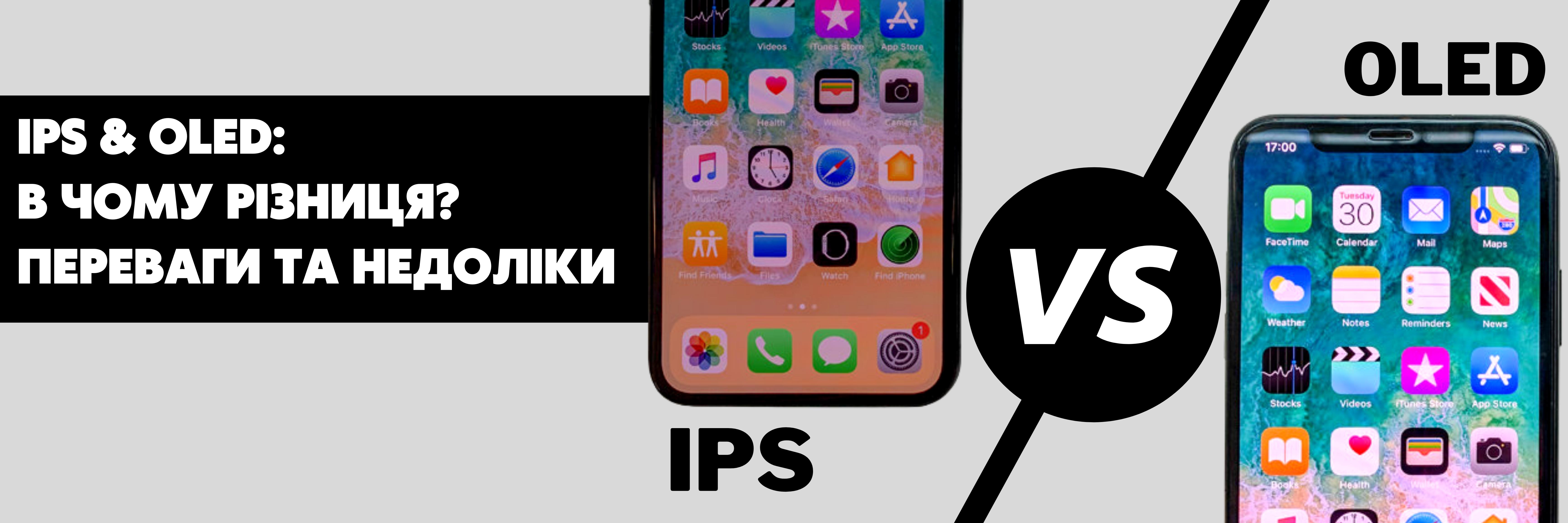
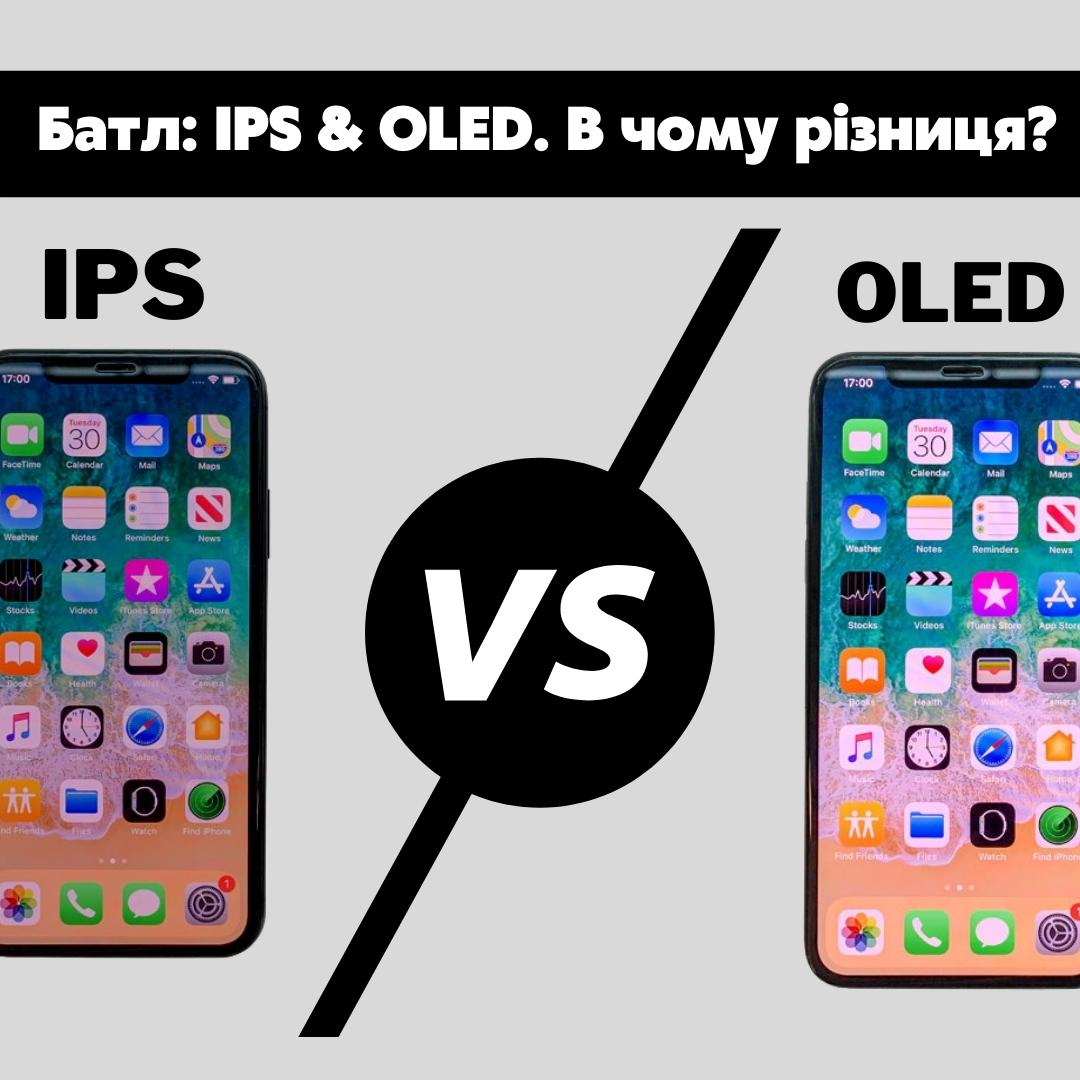
You have probably noticed that in a gadget store, a consultant seller, talking about the characteristics of a smartphone, necessarily mentions the type of screen matrix. After all, brightness, image quality, color rendering and contrast depend on this, which significantly affects the convenience of using a smartphone. There are so many different types of screens these days and it's easy to get confused. But the most common are IPS and OLED.
What is the difference between them?
In production technology
In the IPS display, liquid crystals are used to transmit the image, placing them parallel to the panel, and under them there is a special layer that constantly illuminates the screen along its entire plane. To obtain different colors, the light passes through liquid crystal filters, which, under voltage, are able to pass or block it in certain areas of the display.
An OLED screen consists of organic light-emitting diodes that can emit light on their own when current passes through them. This matrix has a film structure located between two conductors. The peculiarity is that on such a screen it is possible to highlight individual necessary pixels, while all the others will not light up.
To determine which display is better, we offer to arrange a battle between them! So let's get started!
Round I: Matrix thickness and energy efficiency
OLED has an advantage here, because it is "slimmer" than IPS, to which the backlight layer adds extra millimeters. Also, due to the operation of each diode separately, the OLED matrix has low energy consumption.
Round II: Stability and longevity of work
One of the main disadvantages of OLED is the burning of pixels, especially blue ones. After all, in this type of matrix, blue pixels are designed for only 15,000 hours of operation. Undoubtedly, according to these criteria, an IPS screen that does not have this problem is better.
Round III: Brightness, color rendering and contrast
OLED screens are able to transmit a wider range of colors than IPS and perfectly reproduce "deep" black, and also demonstrate a high level of brightness and contrast. This round is for OLED.
Round IV: Eye strain
The most common disadvantage of OLED displays is pulse width modulation. At a low level of brightness, it can cause additional strain on the eyes, due to which the eyes will tire faster when working with such a display. Your eyes will be more comfortable with the IPS matrix.
Round V: Reaction to touch
According to this parameter, OLED is more agile. In IPS, the screen's response to displaying information is worse. Apparently, this will be a significant disadvantage for gamers.
Round VI: Cost
The IPS screen is a cheaper option in manufacturing, which sometimes helps the manufacturer lower the prices of their devices. Therefore, smartphones with this type are a more budget option.
As you can see, each matrix has its pros and cons.
Therefore, when choosing, we advise you to rely on those criteria that are important to you.
And GSM-Forsage always has a huge selection of display modules with different types of matrices, including IPS and OLED.
You can find them at https://bit.ly/3er7M6p

 UA
 RO





The information below is required for social login
Sign In
Create New Account