Short answer: in phone-parts catalogues, Service Pack commonly means a part presented as coming through the device maker's service channel, with model-specific packaging and a manufacturer part number. An OEM label does not provide the same evidence by itself. OEM is a broad term, and its exact meaning in an aftermarket listing depends on the seller. Choose by the part number, full model code, package contents, traceability, warranty and the right to test before fitting.
What does Service Pack mean for a phone part?
We found no single public Service Pack standard that covers every phone brand and seller. In the parts trade, the term commonly describes a component presented as supplied through the device maker's service channel. Its practical value comes from the supporting evidence, not the words in the product title: a readable label, a manufacturer part number, exact model coverage, stated contents and a seller who can account for the part's source.
Samsung service display assemblies, for example, can use part numbers in the GH82-xxxxx format. An authorised parts listing identifies a Galaxy S23 display as a Samsung SVC LCD Assembly Octa Kit with manufacturer number GH82-30749A. That is a useful example of a service part number, not a universal authentication method. The number still needs to match the model, package and seller record.
What does the Service Pack label not guarantee?
The label does not prove that a box has never been opened, that its contents have not been changed or that the part fits every regional version of a phone. Brands do not all use the same boxes, seals or labelling rules. Ask for photographs of the actual package being supplied, rather than relying on a generic catalogue image.
- Match the manufacturer part number to the full phone model code.
- Check the revision, colour and whether the assembly includes a frame.
- Confirm every component included in the package.
- Ask whether the item was opened, returned or previously fitted.
- Get the testing, warranty and return conditions in writing.
What does OEM mean in an aftermarket listing?
In general supply-chain language, an OEM, or original equipment manufacturer, makes equipment or components used in another company's product. In a phone-parts catalogue, however, OEM may describe a supplier connected with the original production chain, a module assembled outside the phone brand's service channel, or simply a claimed quality level.
Apple's current Parts and Service History page uses status terms such as Genuine, Used and Unknown Part. The Samsung consumer repair pages we reviewed refer to genuine Samsung parts. Neither source presents OEM as a universal repair grade. Instead of asking only “is this OEM?”, ask who made the panel and module, who assembled it, whether it is new or refurbished, what is included and what evidence supports the label. For the broader three-label overview, see Original, OEM or Service Pack: how replacement phone displays differ.
What is the practical difference between Service Pack and OEM?
| Criterion | Service Pack | OEM catalogue label |
|---|
| Main claim | Supply through the device maker's service channel | A connection to an original equipment maker or a claimed OEM level |
| Evidence to request | Package label, manufacturer part number, exact model and contents | Panel/module maker, assembly source, condition and contents |
| Supply route | Claimed brand service channel | May be different and needs seller clarification |
| Package contents | Defined by the specific part number | Defined by the listing; frame and small components must be checked separately |
| Main risk | Trusting the box or wording without matching the actual part | Treating an undefined sales label as proof of origin |
Origin is only one criterion. Panel technology, condition and commercial grade must be checked separately. The wider vocabulary, including OLED, In-Cell, REF and copy classes, is covered in the phone display quality-grades guide.
How should you check the package and part number?
- Request clear photographs of every side. The brand, part number, model codes, barcode and service markings should be readable. Confirm that the photos show the unit the seller will ship.
- Match more than the marketing model name. A phone family can contain several full model codes and revisions. A shared retail name is not enough.
- Compare the label with the module. Flex markings, connectors, cut-outs, colour and frame should match the order. Appearance alone does not prove authenticity.
- Confirm the assembly contents. A bare display, display with frame and service assembly with extra components can require different work.
- Record the terms before payment. Save the listing and the seller's confirmation of the part number, warranty and permitted checks before film removal or adhesive.
If the seller will not show the label, cannot explain the number or replies only with “100% original”, treat the Service Pack claim as unverified.
When is Service Pack worth prioritising?
Service Pack is useful when traceability matters: a high-value or warranty repair, a customer request for a service-channel part, a difficult installation, a need for known assembly contents or a repair record that may later be challenged. The advantage exists only when the evidence and seller terms are consistent.
Do not pay more for the words alone. Without the package label, matching part number and accountable seller, the Service Pack wording has much less practical value.
When can an OEM-labelled option make sense?
An OEM-labelled option can be reasonable for a budget-constrained repair when the seller clearly defines the term for that listing. You still need exact compatibility, a disclosed condition, clear frame/component contents, a warranty and permission to test before final fitting.
Compare the whole repair rather than the item price alone. A framed module may reduce transfer work, while an unframed module may suit another workshop process. The wider compatibility and ordering workflow is covered in How to choose smartphone repair parts before ordering.
What do live catalogue examples show?
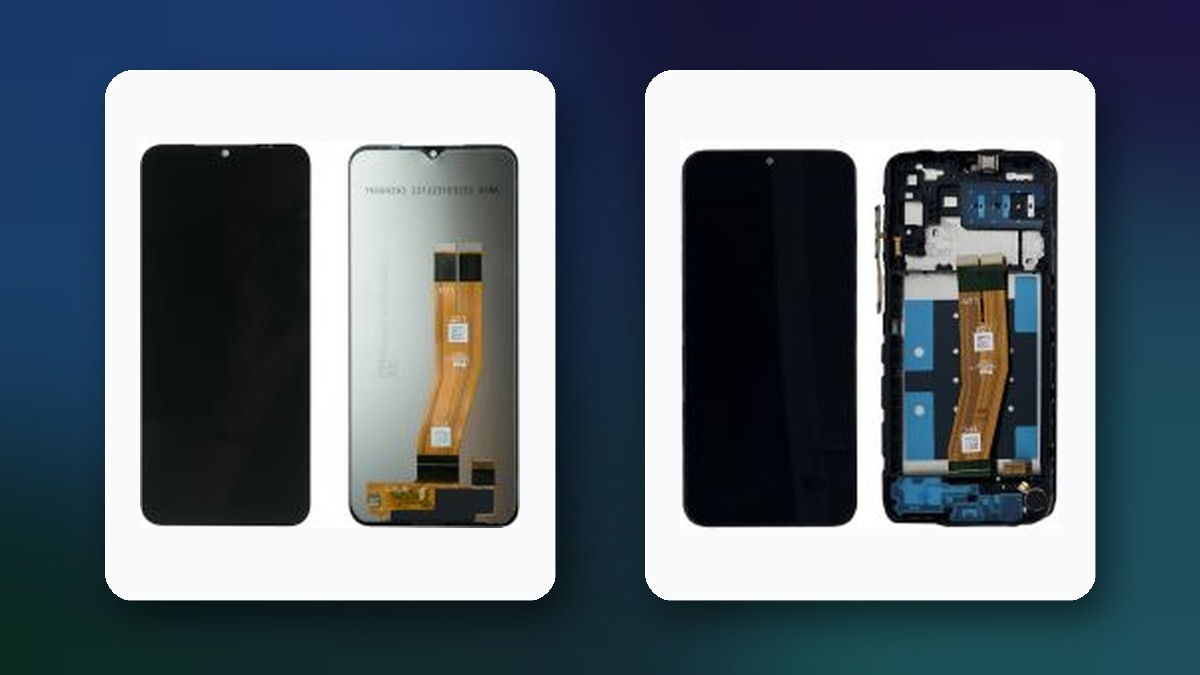
The catalogue currently contains two same-model pairs. For Galaxy A14 SM-A145 and Galaxy A20S SM-A207, one card is labelled Service Pack, while the other says Original (OEM) and explicitly states that a frame is included. This is not a quality ranking. It shows why provenance and package contents must be read as separate attributes.
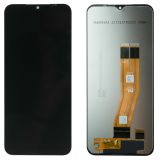 Display Samsung Galaxy A14 SM-A145 OR 100% (Service Pack) Black15,00 $›
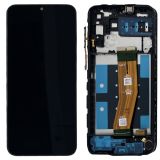 Display Samsung Galaxy A14 SM-A145 complete with frame Black Original (OEM)16,50 $›
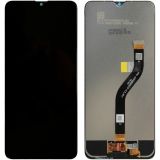 Display Samsung Galaxy A20S SM-A207 OR 100% (Service Pack) Black14,29 $›
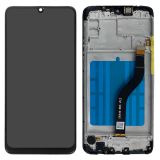 Display Samsung Galaxy A20S SM-A207 complete with frame Black Original (OEM)16,50 $›
What should you check before buying?
- Record the full phone model, regional code and known revision.
- Request the exact part number and photographs of the actual package.
- Ask what Service Pack or OEM means for this specific listing.
- Match display technology, colour, frame, connectors and package contents.
- Confirm whether the module is new, refurbished, pulled or another stated condition.
- Ask which films and labels may be removed during testing.
- Get the warranty, return and incompatibility procedure in writing.
After delivery, inspect the package and module, match the identifiers and connect the part using the model-specific procedure. Check the image, touch response and related functions before adhesive or final fitting. If the number, contents or behaviour do not match, stop and contact the seller.
Sources
The ProductChips are live examples of catalogue wording, not authentication evidence or a quality ranking. Check current compatibility, package contents, price and availability on the product page before ordering.

 UA
 RO




The information below is required for social login
Sign In
Create New Account