Useful information
TOP-5 useful gadgets for the motorist. — a practical article with explanations and recommendations for technicians, service centers, and users. It highlights the main points to consider when choosing, using, or repairing devices.
We first published this list in February 2023 as a short top five. In October 2026 we turned it into a practical guide: what each gadget is for, what to check before buying, and where people usually go wrong. The five gadgets are the same: a tyre inflator, a GPS tracker, a dash cam, a car vacuum cleaner and a polisher. We also added the item that powers most of them, a good car charger.
1. Portable tyre inflator
An electric inflator saves you from searching for a working air pump at a petrol station. Most models run from the 12 V accessory socket (the old "cigarette lighter"), some connect straight to the battery terminals, and cordless versions have a built-in battery.
What to check:
- Auto stop. You set the target pressure and the inflator switches off when it reaches it.
- Power source. Accessory sockets are usually protected by a 10 to 20 A fuse. A powerful inflator may need a battery-clamp connection.
- Duty cycle. Cheap compressors overheat if you inflate all four tyres in one go. The manual states how long they can run before a cooling break.
- Gauge accuracy. Check the built-in gauge against a separate tyre gauge now and then.
Use the pressure from the label on the driver's door jamb or in the owner's manual, not the maximum printed on the tyre sidewall. The US road safety agency NHTSA recommends checking pressure at least once a month, including the spare, when the tyres are cold, meaning the car has not been driven for at least three hours.
2. GPS tracker
A tracker shows where the car is. It helps after a theft and is useful for a small delivery business that needs to see where its vehicles are. Some models also report ignition status or let you immobilise the engine remotely, but those need professional installation.
- OBD plug-in trackers are installed in seconds, but thieves know where the OBD port is.
- Hardwired trackers are hidden behind trim and powered by the car's wiring, so they are harder to find.
- Battery trackers need no wiring, but you have to recharge them.
Most trackers need a SIM card or a subscription, and the update interval affects both battery life and how precise the track is. Only track a vehicle you own or have the right to monitor. If you mainly want to find a lost phone rather than a car, see our guide on how to find a lost smartphone.
3. Dash cam
A dash cam records the road and can help settle what happened in an accident, as long as you were driving by the rules. Most cameras record in a loop and lock the clip when the built-in G-sensor detects an impact. Useful extras include GPS speed and location stamps and a second camera for the rear window.
- Heat. Cameras with a supercapacitor instead of a lithium battery handle a hot parked car better.
- Parking mode. For recording while parked, use a hardwire kit with a low-voltage cut-off so the camera does not drain the car battery.
- Memory card. Choose a high-endurance microSD card designed for continuous recording and format it now and then.
- Local rules. Rules on mounting cameras on the windscreen and on publishing footage with other people in it differ between countries. Check them where you drive.
4. Car vacuum cleaner
A compact car vacuum does not replace a full interior clean, but it keeps sand, crumbs and pet hair under control between washes. Cordless models are the most convenient. Pay attention to the run time, how the filter is cleaned and the nozzles included: a narrow crevice tool gets between the seats, and a brush helps on the dashboard and vents.
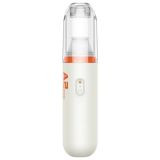 Car vacuum cleaner Baseus A2Pro Car Vacuum Cleaner(6000pa) Whiteout of stock›
5. Car polisher
A polisher removes light swirl marks and restores gloss much faster than working by hand. For beginners, a dual action (random orbital) polisher is the safer choice: its pad oscillates as well as spins, so it is much harder to burn through the paint. Rotary polishers cut faster but need experience. Mains-powered machines suit regular work, while cordless ones are handy for small touch-ups. Start with the mildest pad and polish on a test area.
Bonus: power for your gadgets
A phone used for navigation, a dash cam and an inflator all compete for the same socket. A car charger with USB-C Power Delivery charges a modern phone quickly while the navigation app keeps running. Our article on whether fast charging damages your phone battery explains why that is fine for the battery. If your car has no Bluetooth audio, a charger with an FM transmitter can stream music and calls to the car radio.
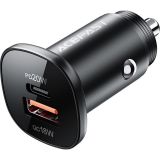 Car charger ACEFAST B1 mini 38W(USB-C+USB-A) dual-port metal car charger11,70 $›
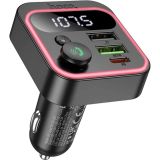 AZP with FM modulator HOCO E85 Tiger PD20W+QC3.0 car BT FM transmitter Blackout of stock›
Avoid splitting one socket between several power-hungry devices: the total current is still limited by the socket fuse. And do not leave your phone on the dashboard in a parked car in summer. Apple, for example, says iPhones are designed for ambient temperatures between 0 and 35 °C and advises against leaving them in a car.
Before you buy: a short checklist
- Check the power source: accessory socket, battery clamps or built-in battery, and the fuse rating of your socket.
- Inflator: look for auto stop and a stated duty cycle.
- A dash cam should have heat-tolerant power storage and a high-endurance memory card.
- Compare trackers by installation type, subscription cost and update interval.
- Vacuums and polishers differ in run time and accessories; beginners should pick a dual action polisher.

 UA
 RO






The information below is required for social login
Sign In
Create New Account