Useful information
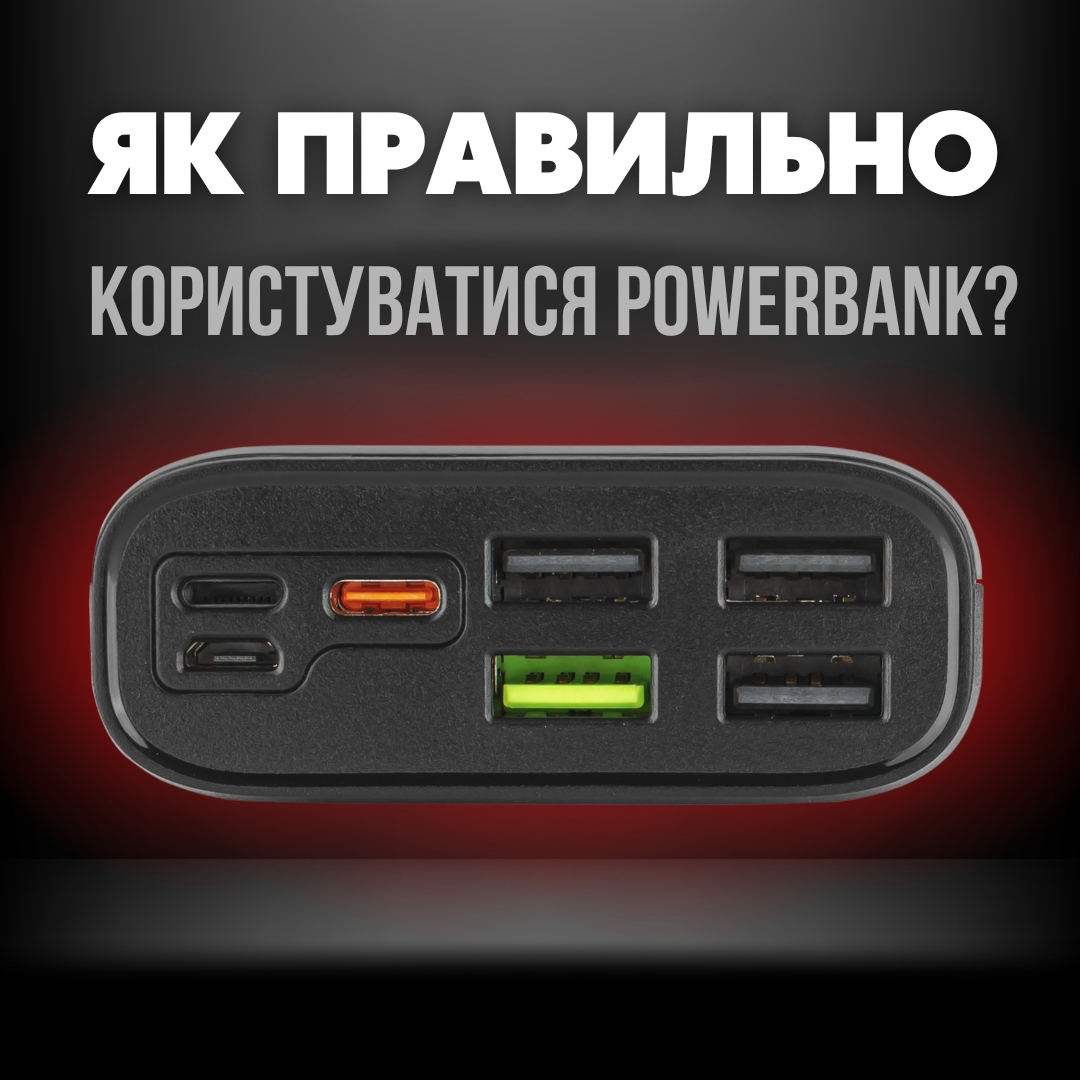
How to use PowerBank correctly. — a practical article with explanations and recommendations for technicians, service centers, and users. It highlights the main points to consider when choosing, using, or repairing devices.
You do not need to "break in" a new power bank by draining it to 0% three times. Modern lithium-ion packs work fine with partial charges. What matters more is using a compatible charger and cable, keeping the pack away from heat, storing it properly and retiring it as soon as the housing shows damage. Your model's manual always comes first: the tips below are general rules for lithium batteries.
The old "three full cycles" advice is a myth
Full discharge cycles were useful for older nickel-based batteries. Lithium-ion cells have no memory effect, and Apple's own guidance for its lithium-ion devices says that partial charging throughout the day does not harm the battery. Running a pack flat over and over only adds stress. Top it up whenever it suits you and avoid leaving it fully discharged for long.
How to charge the power bank and your phone
- Check the input and output ratings printed on the case or in the manual. The headline wattage is a maximum. On many packs it is shared between ports, so charging two devices at once may give each of them less power.
- Use an undamaged cable that fits the port properly. Fast charging over USB Power Delivery or another protocol only works when the power bank, the cable and the phone all support it. If one of them does not, charging falls back to a slower mode.
- Charge on a dry surface away from radiators, direct sun and the dashboard of a hot car.
- When charging is finished, unplug the cable, check that the connector is clean and dry and put the pack away.
For a closer look at charging protocols and battery wear, read our guide on whether fast charging damages your phone battery.
Warning signs: stop using the power bank
Unplug the pack and stop using it if it gets excessively hot, swells, bends, cracks or has been in contact with liquid. Do not puncture or open a damaged battery, and do not try to repair it at home. Let an overheated device cool down away from flammable materials and hand a damaged pack in for recycling according to local rules.
What shortens a power bank's life
- Long periods in a hot car, in direct sunlight or next to a heater.
- Storing it completely empty for months. Apple notes that a fully discharged battery left in storage can fall into a deep discharge state and stop holding a charge.
- Worn cables, loose ports and charging in damp conditions.
- Drops, knocks and continuing to use a pack after the case has been deformed.
The same rules about heat and charge level apply to the battery inside your phone. If you use an iPhone, see our tips on extending iPhone battery lifespan.
How to store a power bank you rarely use
Follow the manufacturer's instructions first. As a general guide, phone makers recommend storing lithium-ion batteries partly charged: Apple suggests about 50%, Samsung 50 to 70%. Switch the pack off, keep it in a cool, dry place and check the charge level every few months (Samsung suggests every 3 to 6 months). Keep it away from keys, coins and other metal objects that could short exposed contacts.
Taking a power bank on a plane
IATA's passenger guidance says power banks and spare batteries belong in hand baggage, not in checked luggage, with the terminals protected against short circuits (original packaging or tape over the contacts). For batteries above 100 Wh you need to check with the airline, as approval may be required. To estimate the rating, multiply the capacity in mAh by the nominal cell voltage and divide by 1,000: a 20,000 mAh pack at 3.7 V is about 74 Wh. The figure on the label is the one that counts, and each airline may have stricter rules, so check before you fly.
Power bank examples for different needs
When choosing a pack, compare capacity, maximum output, port types, supported protocols, size and weight. A large pack suits several charges or a tablet, while a compact or magnetic one is easier to carry every day. Current specifications and availability are listed on each product page.
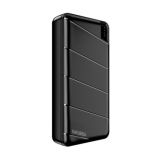 Portable battery (PowerBank) Kakusiga (20000 mAh) 22.5W Blackout of stock›
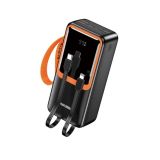 Portable battery (PowerBank) Kakusiga (30000 mAh) 22.5W Blackout of stock›
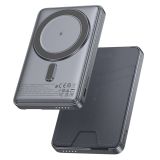 Powerbank Hoco Q46 5000 mAh, PD20W, with wireless charging, Gray26,35 $›
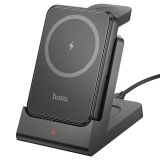 Powerbank Hoco J149 5000 mAh, magnetic with wireless charging and docking station, Blackout of stock›
Quick check before each use
- Housing: intact, flat and not swollen.
- Ports: clean and dry.
- Cable: no kinks, cuts or exposed wires.
- Output and protocol: suitable for the device you are charging.
- Location: out of the sun and away from other heat sources.
If you charge the power bank itself from the mains, a good wall charger and a protected socket matter too. Our article on protecting electronics from power surges explains the options.

 UA
 RO




The information below is required for social login
Sign In
Create New Account