Useful information
What is the lifespan of a smartphone? — a practical article with explanations and recommendations for technicians, service centers, and users. It highlights the main points to consider when choosing, using, or repairing devices.
A new smartphone is a big purchase, so the obvious question is how many years it will actually last. There is no single number. A phone usually reaches the end of its useful life for one of three reasons: the battery no longer gets through the day, the manufacturer stops sending security updates, or a repair costs more than the phone is worth to you. This guide looks at each of those limits, what manufacturers and EU rules promise today, and how to decide between a repair and a replacement.
Warranty is not the same as lifespan
The warranty only tells you how long the seller or manufacturer is responsible for defects. Apple, for example, gives a one-year limited warranty on the iPhone. In the European Union, the seller's legal guarantee under Directive (EU) 2019/771 lasts at least two years. Neither period says when a phone wears out. Plenty of phones keep working for years after the warranty ends, and most of their faults after that point are ordinary repairs: a battery, a screen, a charging port.
The original version of this article said that Apple recommends replacing an iPhone every two years. We could not find any such recommendation from Apple, so we have removed it. What Apple does publish is more useful: its product environmental reports assume three years of use by the first owner, and its service policy says iPhone parts and service are available for at least five years after Apple last sold a model, and for up to seven years where parts allow. After seven years, Apple classes a product as obsolete and stops hardware service.
Software support: the limit you cannot repair
A worn battery or a cracked screen can be replaced. Missing security updates cannot. Once a phone stops getting patches, banking apps and other services may gradually stop supporting it, and it becomes riskier to use for payments and personal data. That is why the update policy is now the most important number on the spec sheet:
- Google Pixel: Pixel 8 and later models get 7 years of OS and security updates, counted from when the model first went on sale in the US Google Store. Pixel 6 and Pixel 7 models get 5 years.
- Samsung Galaxy: since January 2024, Samsung has extended security update support for selected Galaxy devices to up to 7 years. The Galaxy S24 series was the first to get seven years of OS upgrades and security updates.
- Apple iPhone: Apple does not publish a fixed number of iOS versions per model, but its UK product security declarations promise a minimum of 5 years of security updates from the date a model was first supplied. In practice support often lasts longer: iOS 26, released in 2025, still runs on the iPhone 11 from 2019.
Before buying, check the update end date for the exact model and subtract the time it has already been on sale. A phone that launched two years ago has two fewer years of support left than the same model bought on launch day.
What the EU rules changed from 20 June 2025
Commission Regulation (EU) 2023/1670 on ecodesign for smartphones and tablets started applying on 20 June 2025 to models placed on the EU market from that date. Its main points for anyone who wants to keep a phone longer are:
- if the manufacturer releases security, corrective or functionality updates for the operating system, it must make them available for at least 5 years after the model stops being placed on the market;
- the battery must manage at least 800 full charge cycles while keeping at least 80% of its capacity;
- key spare parts, including the battery, display, cameras, charging port and speakers, must stay available to professional repairers for at least 7 years after the model leaves the market;
- phones must offer an optional charging mode that stops at 80% to slow battery wear.
From the same date, phones sold in the EU carry an energy label that also shows battery endurance in cycles, a repairability class and resistance to drops. These rules do not cover older models, so for a phone launched before mid-2025 you still have to check the manufacturer's own policy.
Battery wear: the most common reason a phone feels old
A lithium-ion battery loses capacity with every charge cycle and with time. Apple states that iPhone 14 models and earlier are designed to retain 80% of their original capacity after 500 complete charge cycles, and iPhone 15 models after 1000 cycles, under ideal conditions. Heat and long periods at 100% speed this up, which is why modern phones offer optimised charging or a charge limit. If you want to know whether fast charging also adds wear, we covered that question separately in our article on whether fast charging damages your phone battery.
When capacity falls to around 80%, many owners decide the phone is finished. Usually it is not: a new battery costs far less than a new phone and restores the battery life the device had when it was new. Signs that it is time, and how to check battery health, are in our guide on when a phone battery should be replaced.
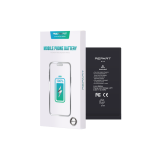 iPhone 13 battery (3227 mAh) REPART10,79 $›
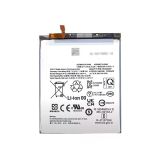 Battery Samsung Galaxy A54 5G SM-A546 / A34 5G SM-A346 / EB-BA546ABY (5000mAh)15,56 $›
Repair or replace: a quick way to decide
| Situation | Usually worth repairing | Usually time to replace |
|---|
| Battery drains fast, phone otherwise fine | Yes, a battery swap is one of the cheapest repairs | Only if updates have already ended |
| Cracked screen | If the repair costs a clear minority of the phone's value | If the screen costs close to what the phone is worth |
| Charging port, speaker, camera | Yes, these are common and relatively simple parts | Rarely |
| Security updates have ended | Only for light use without banking or work data | Yes, if you rely on the phone for payments or personal data |
| Not enough storage or RAM for your apps | Clearing storage helps for a while | Yes, hardware limits cannot be repaired |
Repairability itself varies a lot between models: some need special tools and adhesive work for a battery swap, others are designed for quick part replacement. If longevity matters to you, it is worth reading our overview of repairable smartphones and what to check before buying.
How to make a smartphone last longer
- Install system updates as they arrive, and check the model's support end date when you buy it.
- Turn on optimised charging or an 80% charge limit if your phone has it.
- Keep the phone out of heat: a car dashboard in summer or a pillow during charging wears the battery faster than daily use.
- Use a certified charger and cable. A damaged cable can look like a faulty charging port.
- Use a case and a screen protector. Replacing a protector is much cheaper than replacing a display.
- Do not treat water resistance as waterproofing: seals age, and liquid damage is rarely covered by a warranty.
- Replace the battery when capacity drops noticeably instead of replacing the whole phone.
So how long does a smartphone last?
The hardware of a well-made phone can work for many years, especially if you replace the battery once along the way. For most people, the real limit is software support, which now ranges from about 5 years to 7 years for recent models from the major brands. A sensible rule is to keep using and repairing a phone as long as it still receives security updates and does what you need, and to plan a replacement when updates end or when one repair would cost close to the phone's value.

 UA
 RO





The information below is required for social login
Sign In
Create New Account