Useful information
Tips for the master: how to arrange a workplace — a practical article with explanations and recommendations for technicians, service centers, and users. It highlights the main points to consider when choosing, using, or repairing devices.
A phone repair workbench should support the order in which a repair actually happens: intake, diagnostics, disassembly, board work, reassembly and handover. The basics are enough space, even lighting, ESD control, local fume extraction, safe power and a separate place for the parts of every job.
Split the bench into zones
| Zone | What goes there | What to keep out |
|---|
| Clean assembly | Mat, parts tray, screwdrivers, tweezers | Flux residue, debris and loose screws from other jobs |
| Soldering | Soldering station, iron stand, fume extractor, board holder | Cables running across the hot area and open containers of liquid |
| Diagnostics | Bench power supply, multimeter, test leads | Connecting a board that has not been inspected first |
| Storage | Labelled compartments, bags and a quarantine shelf | Mixing parts from different orders |
Equipment examples
When choosing equipment, check the dimensions and the mounting method against your own bench and tools. These items from the GSM-Forsage catalogue cover a mat, board fixing, fume removal and magnification:
 Heat-resistant mat Mechanic V71 (550 x 380mm)out of stock›
 Board holder (assembly table) Mechanic MK2out of stock›
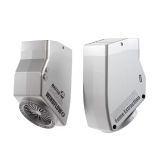 WindFlow X microscope hood with LED illumination (5V, 2A, Type-C)18,50 $›
 Trinocular microscope Mechanic MOS300-B11 (6X-45X) with R16 illuminationout of stock›
For soldering equipment itself, our guide to choosing a professional soldering station explains the main station types, and the overview of bench accessories for phone repair goes deeper into mats, holders and lighting.
Lighting and ergonomics
Combine even general lighting with an adjustable task light. Choose colour temperature and brightness so that there is no visible flicker, glare or reflections on glossy parts, and judge by how your eyes feel after a full day rather than by a single number. Set the height of the chair, bench, microscope and armrests so that your shoulders stay relaxed and your wrists are not bent all the time. Change position and take short breaks during long jobs.
ESD and electrical safety
ESD protection works as a system: a suitable work surface, a wrist strap where needed, a verified ground point, appropriate tools and regular checks. A mat on its own is not a full ESD setup, and a wrist strap should never be clipped to a random metal object. Keep extension leads, cables and power supplies away from liquids and hot tools. Do not overload sockets, and take any equipment with damaged insulation out of service.
Fumes, chemicals and batteries
Place the fume extractor so that it captures fumes right at the soldering point, before they reach your breathing zone. The UK Health and Safety Executive (HSE) lists fume from rosin (colophony) based flux as a common cause of occupational asthma. HSE also warns that small bench fan units with coarse carbon filters may not capture all of the fume, so keep the unit close to the joint and keep your head out of the plume. Keep liquids and adhesives in their original containers and follow the label and the safety data sheet (SDS). Never charge, puncture or heat a damaged or swollen battery. Separate it from ordinary parts and handle it according to the manufacturer's instructions and local rules. Our article on workshop safety rules for repair technicians covers these risks in more detail.
A system for parts and orders
- Give each order a number before you open the device.
- Put its screws and parts in a separate labelled compartment.
- Record the model, condition, included accessories and any serial data your process needs.
- Keep new, removed, faulty and untested parts apart.
- After reassembly, check that the compartment is empty and record the test results.
Daily checklist
- Clean the surface and clear the central zone.
- Check the fume extractor, lighting and tool stands.
- Match the labels of all open orders.
- Put liquids and batteries back in their assigned places.
- Inspect cables, and switch off heating equipment once it has gone through its cool-down.
Summary
A well organised bench reduces mix-ups and makes repairs repeatable. Start with zoning, lighting, board fixing, ESD control and fume extraction, then add equipment as your real workload requires it.

 UA
 RO








The information below is required for social login
Sign In
Create New Account